



Studies of the neurobiology of reward are important to advance affective neuroscience, and they provide insights into a variety of psychopathologies, including drug addiction, eating disorders, obsession and depression. Progress has been helped by the ability of neuroscientists to manipulate an ever-expanding number of brain components. Future studies will be most useful for elucidating the roles of brain components if they can similarly parse behavioral reward into its actual psychological components.
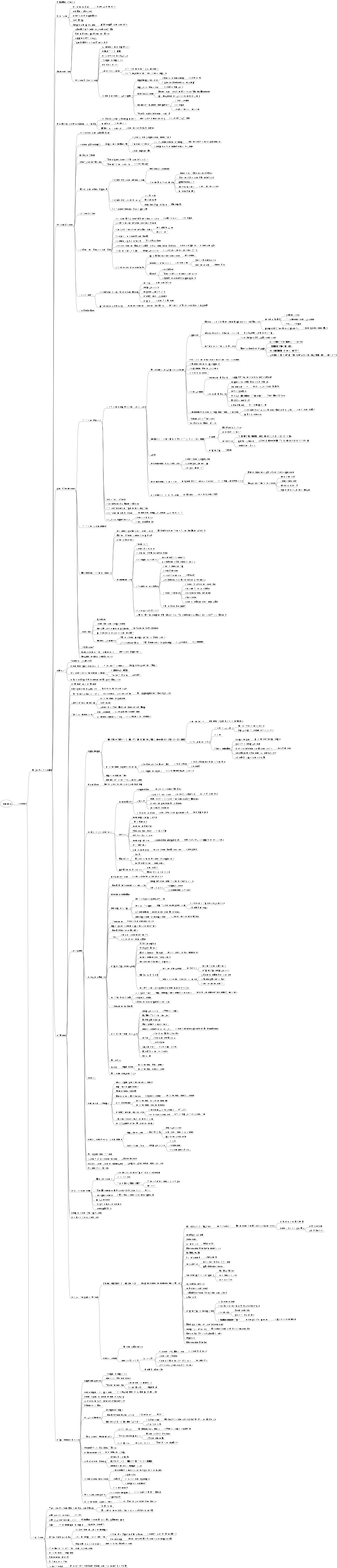
For example, imagine a new inducible knockout mouse that shows abnormally slow (or fast) acquisition of cocaine self-administration behavior. The gene manipulation apparently alters cocaine reward – but which part of reward? Reward contains multiple psychological components (Fig. 1). The mutation might have changed any of them, and their implications for function are very different. To say simply that a brain manipulation alters reward, without specification, is akin to saying it alters a ‘neurotransmitter receptor’ – without specifying which receptor or even which neurotransmitter. It is important to be more precise. What are the psychological components of reward? First, it is necessary to learn about relationships among stimuli and about the consequences of actions. Second, reward consumption can produce hedonic consequences. Third, the individual has to be motivated to learn and act. Further, each of these three explanatory classes contains multiple component psychological processes, any of which could be affected by a neurobiological manipulation. Neuroscientists will find it useful to distinguish these psychological components of reward because understanding the role of brain molecules, neurons and circuits requires understanding what brains really do – which is to mediate specific behavioral and psychological functions.
References
Berridge, Kent C., and Terry E. Robinson. 2003. “Parsing reward.” Trends in Neurosciences 26 (9): 507–13. doi:10.1016/S0166-2236(03)00233-9.0