
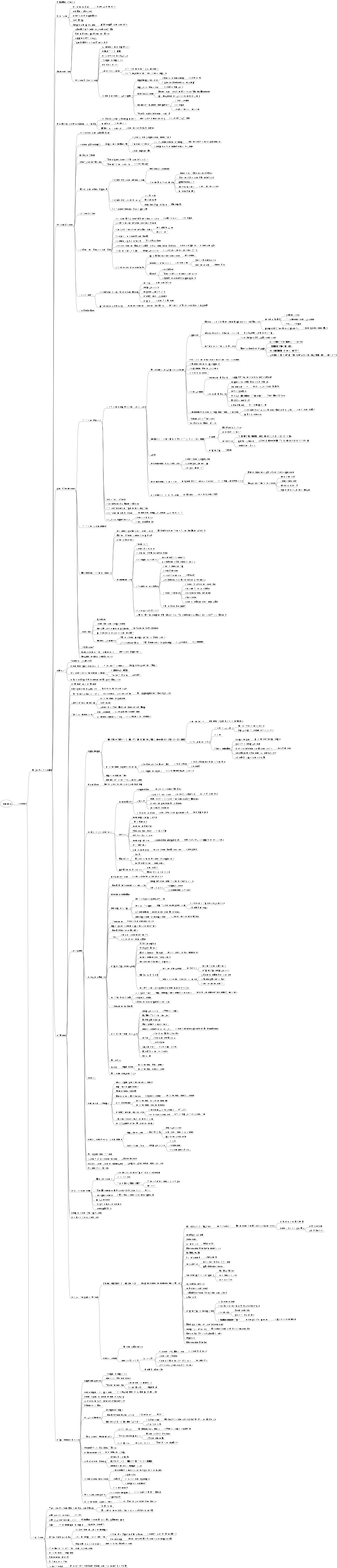



Hopelessness theory of depression.
The common-language term hopelessness captures the two core elements of this proximal sufficient cause; (a) negative expectations about the occurrence of highly valued outcomes (a negative outcome expectancy), and (b) expectations of helplessness about changing the likelihood of occurrence of these outcomes (a helplessness expectancy). Thus, whereas helplessness is a necessary component of hopelessness, it is not sufficient to produce hopelessness (i.e., hopelessness is a subset of helplessness; Garber, Miller, & Abramson, 1980). For brevity, we use the term hopelessness to refer to the proximal sufficient cause; hopelessness, of course, is an expectation. Whereas the term hopelessness sometimes implies negative affect as well as negative outcome and helplessness expectations, we do not we do not include negative affect as part of our definition of hopelessness (Abramson, Lyn Y.; Metalsky, Gerald I.; Alloy, Lauren B. (1989): Hopelessness depression: A theory-based subtype of depression. In Psychological review 96 (2), 359)
The common-language term hopelessness captures the two core elements of this proximal sufficient cause; (a) negative expectations about the occurrence of highly valued outcomes (a negative outcome expectancy), and (b) expectations of helplessness about changing the likelihood of occurrence of these outcomes (a helplessness expectancy). Thus, whereas helplessness is a necessary component of hopelessness, it is not sufficient to produce hopelessness (i.e., hopelessness is a subset of helplessness; Garber, Miller, & Abramson, 1980). For brevity, we use the term hopelessness to refer to the proximal sufficient cause; hopelessness, of course, is an expectation. Whereas the term hopelessness sometimes implies negative affect as well as negative outcome and helplessness expectations, we do not we do not include negative affect as part of our definition of hopelessness (Abramson, Lyn Y.; Metalsky, Gerald I.; Alloy, Lauren B. (1989): Hopelessness depression: A theory-based subtype of depression. In Psychological review 96 (2), 359)